This article compares products for general research purposes only and is not medical advice. When your baby is ready for solids, and any feeding concerns specific to your child, are questions for your pediatrician.
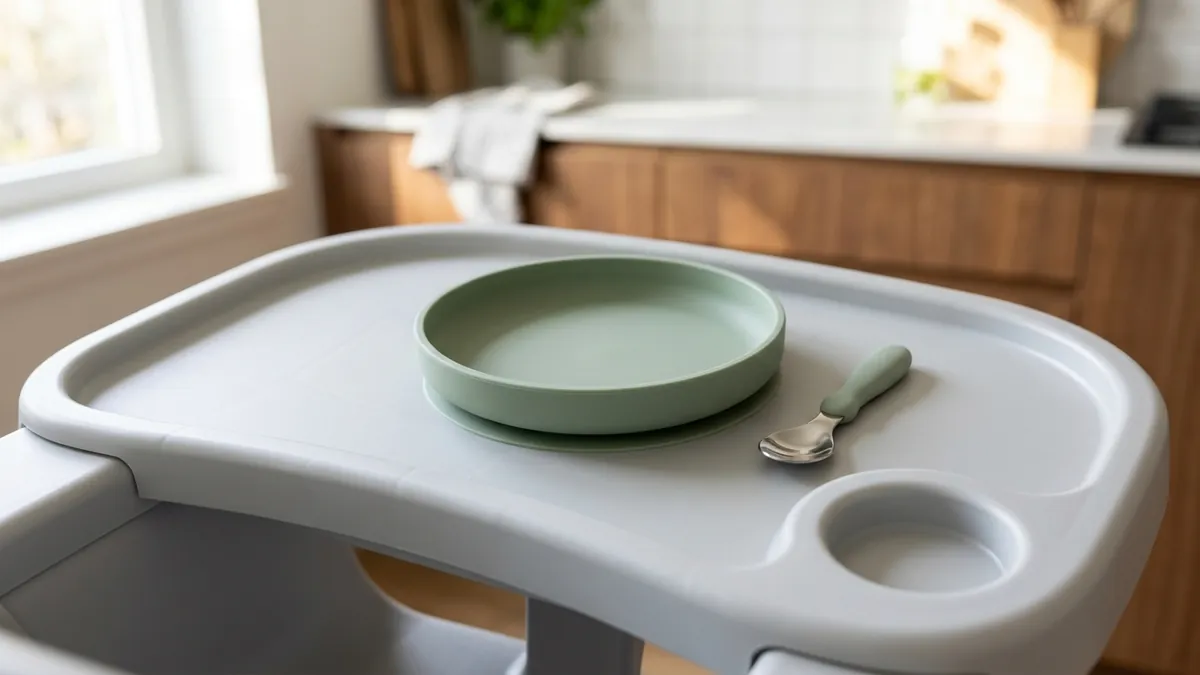
Short answer: A suction plate for high chair trays sticks best when the tray is flat, clean, dry, and non-porous — polished plastic or sealed wood. On a textured, scratched, or curved tray, or when the plate’s base overlaps a raised rim or cup holder, expect a weak seal, so measure the tray’s flat area before you buy.
Last updated: September 26, 2026
| Plate | Listed size | How the suction works |
|---|---|---|
| Munchkin Stay Put Suction Plate | 7.5″ L × 9.5″ W × 1.75″ H | Suction bases with quick-release tabs |
| Bumkins Silicone Grip Dish | About 8″ across × 7″ × 1″ deep | Suction base built into the silicone dish |
| Avanchy Bamboo Suction Plate | 7″ round × 2″ tall | Removable silicone suction ring |
| Your tray’s flat area | Measure it | Needs to be larger than the plate’s base |
Researched: sizes and surface guidance come from the Munchkin, Bumkins, Avanchy, OXO, and ezpz product pages, checked in September 2026; we did not test these plates on specific trays.
Table of Contents
Will a Suction Plate for High Chair Trays Stick to Yours?
Start with the surface, not the plate. OXO’s Stick & Stay page says to press its plate onto a clean, flat, non-porous surface, and gives examples: varnished wood or glass tables, and polished plastic high chair trays. ezpz’s FAQ lists wood, laminate, stone, and glass as surfaces its mats seal to — and adds that if a tiled or wood surface has holes, divots, or fractures, the seal won’t work as well.
Put those two together and you get a quick test for your own tray. Smooth, glossy plastic or sealed wood is the easy case. A tray with a matte texture, deep scratches, a seam down the middle, or a pronounced curve is the hard case. The plate might still hold — or it might pop loose the first time a determined baby pulls on the edge, and then —
Well. That’s usually when the plate ends up on the floor.
Measure the Flat Area, Not the Whole Tray
A tray’s listed size includes its rim and any cup holder, and suction can’t seal over either. What matters is the flat surface in the middle. Measure its width and depth, then compare those numbers with the plate’s listed size in the table above. If the plate is larger than the flat area in either direction, part of its base will sit on a rim or a slope, and the seal has a gap from the start. It’s the one measurement that decides whether a suction plate for high chair meals will work on your tray.
This is why a suction plate for high chair trays can grip a dining table perfectly and fail on the high chair. The table is one wide flat surface; the tray is a small flat zone surrounded by edges. A smaller plate or a round base often fits a tight tray more easily than a wide rectangular one — the table shows how much listed sizes vary.
Getting a Better Seal on the Tray You Have
If the surface and size check out, the rest is technique. ezpz’s FAQ says the back of the mat needs to be clean and free of lint and dust, and OXO says both the silicone pad and the dining surface should be clean before you press down. In practice: wipe the tray, dry it, make sure the suction base is dry and lint-free, then press firmly from the center out.
Two-part plates add one more step. OXO describes its plate and pad twisting apart for cleaning, and Avanchy’s bamboo plate uses a removable silicone ring. A ring or pad that isn’t fully reseated after washing is an easy cause of a weak seal, so check it before each meal. Our silicone vs bamboo plates for baby comparison covers how the two plate materials differ in care.
When the Tray Is the Problem
Sometimes no suction plate for high chair use will hold, because the tray itself is textured or heavily worn. In that case, you have a few options: a bowl you hold during purée meals, a plate placed on a smoother surface such as a removable tray insert if your chair has one, or simply waiting to use suction until meals move to the family table. If you’re still choosing between a plate and a bowl, our suction plate vs suction bowl comparison covers that decision.
If you haven’t bought the high chair yet, the tray surface is worth adding to your list of checks. Our best high chair for small spaces roundup notes which picks list a removable or dishwasher-safe tray insert, and our starting solids checklist covers the rest of the feeding setup.
The quick version: check the surface, measure the flat area, and keep both sides of the seal clean and dry. Get those three right, and the plate has its best chance of staying put.
Who it’s for: High chairs with a smooth, flat, non-porous tray — polished plastic or sealed wood — where the flat area is larger than the plate’s base.
Who should skip: Trays that are textured, scratched, curved, or too small for the plate to sit flat; and families who’d rather hold a bowl during purée meals.
Where to buy: The plates in the table are sold on each manufacturer’s site and at major baby retailers. Check the current listing for price, size, and care instructions before buying.
Alternative: A suction bowl for the purée stage, or a plate without suction at the family table. If you’re choosing a plate material, see silicone vs bamboo plates for baby.
This post may contain affiliate links. If you purchase through one of these links, we may earn a small commission at no extra cost to you.
Written by The 4 Kids Dad, parent of 4 kids including newborn twins.
Leave a Reply